Why a TikTok Watermark Remover is a Productivity Tool in 2026
Introduction
Many still think of a TikTok watermark remover as a mere superficial enhancement, a tool you employ to tidy up a clip before saving it. That belief is no longer valid. In 2026, it has become a feature of a smart content workflow. If you leave it out, you will miss out on both exposure and money. A change as minor as an edit can determine the reach of your video.
Short-form video currently rules the internet. It is expected to make up 82% of global traffic, with YouTube Shorts reaching 70 billion daily views and TikTok leading in user engagement. In this economy of attention, it is not only those who create more content that win but also those who distribute it more cleverly.
This article unfolds the reasons why removing TikTok watermarks is a must in 2026, and how it affects the reach of the algorithm, content ROI, brand image, as well as the speed of a modern creator workflow directly.
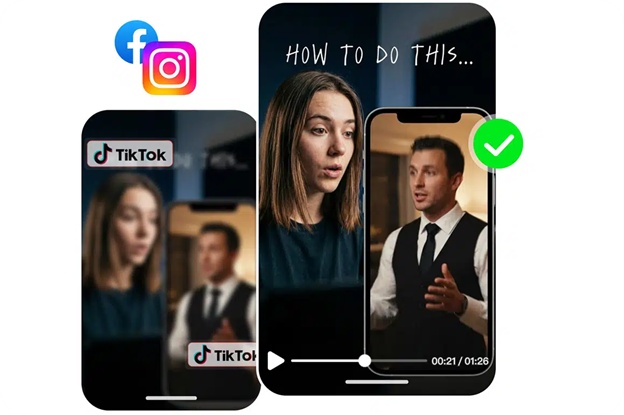
The Real Reason TikTok Adds a Watermark
Understanding Why the TikTok Watermark Exists
First, before you consider it a disadvantage, learn what it does:
The watermark connects the video to the original creator. It ensures that people will still know who made the video when it is sharing outside TikTok. This is very important because videos often do not have a source when they go viral online.
Also, for TikTok, it serves as a kind of free marketing. The platform does not have to pay for the advertisement since every shared video becomes a commercial for TikTok.
Another function of the watermark is that it displays the TikTok logo and the creator's username. Therefore, it is giving credit and making app promotion as well.
Here is the problem. These two things come together. Reposting your own video on another platform, you still have TikTok's logo, even though the content is yours.
Why the TikTok Watermark Actively Hurts Your Reach on Other Platforms
Instagram Reels: An Official Reach Penalty
Instagram has repeatedly made this point. The platform has stated that Reels with visible logos from other apps receive less exposure. This is not the case with your own branding, but it is the case with TikTok or editing app watermarks.
Since 2021, Instagram Reels displaying the TikTok logo have been given limited visibility on people's Explore pages, and via the recommendations.
In 2025, Instagram leader Adam Mosseri also gave out some simple guidelines: go watermark-free, use original sounds, keep the video length under 3 minutes, and upload genuine content. The message is very much on the lines of, don't let TikTok reposts take over.
YouTube Shorts
YouTube revealed that point indirectly as well. Videos that have other platforms' logos may be given less prominence.
A TikTok watermark can indeed discourage viewers. When people see a TikTok video, they tend to swipe quickly, which negatively affects the watch time, and that is very important for reach.
The business math is clear
If you share the same TikTok video with a watermark on Reels and Shorts, you don't get 3x reach. What happens is you get limited reach on both. It’s more of 1x than 3x.
Content Repurposing is No Longer Optional — It's the Strategy
Why Multi-Platform Content Distribution is the Core Creator Strategy in 2026
People have become platform-agnostic walking through 2026. You may find a user scrolling TikTok at lunchtime, enjoying YouTube videos in the evening, and even checking Instagram between meetings. To reach people, you must be present everywhere they spend their time, not just on one app only.
That is why content repurpose is playing a leading role now. Research indicates that brands with active repurpose experience twice the engagement as those that post only original content. In fact, repurposing tops 46% of marketers' performance charts.
In addition, 93% of marketers claim that video brings the highest return on investment, and short-form video is anticipated to receive more funding than any other format.
The 5 Creator Workflows Where Watermark Removal Becomes a Productivity Tool
1. The multi-platform creator
They create content on TikTok and later share it on YouTube Shorts and Instagram Reels. If they don't remove the watermark, they have to re-edit or re-record each video. If they do, they can export clean videos in just a few minutes and post everywhere quickly.
2. The brand or marketer
Employs TikTok to make product videos but then also uses them for ads, emails, and websites. Having a TikTok watermark on the ads gives them a very amateur appearance. Clean videos are a must for paid campaigns and building brand trust.
3. The freelance editor / social media manager
Operates many client accounts and repurposes content for different platforms. Removing watermarks not only saves time but also increases productivity by allowing batch cleanup instead of manual editing one by one.
4. The educator or content archivist
They make TikTok tutorials into YouTube Shorts, LinkedIn posts, or even course material. Watermarking tends to lower the perception of the creator's integrity in both educational and professional contexts.
5. The e-commerce seller
Takes advantage of TikTok videos for product marketing and Shopify embeds. An ad or product page that features a competitor's logo is highly likely to scare away customers, which means having footage that is free of watermarks is critical.
How to Remove TikTok Watermarks Without Losing Video Quality
The Wrong Way — What to Avoid
Among the many mistakes, cropping seems to be the most common one. While it gets rid of the watermark, it also chops off a portion of your video. Quite a few people think screen recording is an option as well. However, it is quite the opposite because it leads to loss of quality, extra compression, and it is quite common for frames to drop or for visual noise to appear. So, the final video looks worse even before you do the upload again.
The Right Way — AI Watermark Removal
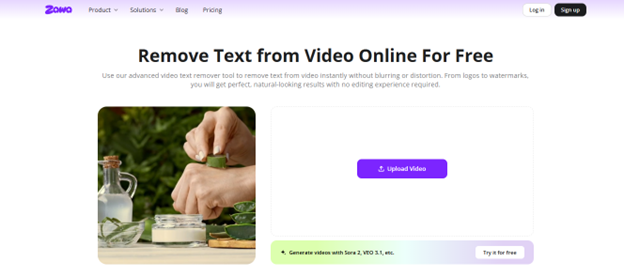
Using AI-powered tools such as Zawa AI Watermark Removal is the best way. Zawa was designed specifically to remove text from videos, logos, and watermarks from videos without affecting their quality. According to the developers, their tool frames the video content, and then they recreate the background so that the video continues being natural and flawless looking. Their full resolution capability stays; hence, no blurring or cropping happens.
Don't Stop at Watermark Removal — Enhance the Video Too
Removing a watermark is just the first step. The entire process also requires video upgrading. This is since quality deteriorates with each phase of sharing. For instance, TikTok compresses videos when they are saved or downloaded. Besides, when you upload it to other platforms such as Instagram Reels or YouTube Shorts, it undergoes compression again. Literally, every upload results in the video being less clear and having fewer details, so indirectly, it is experiencing quality decline step by step.
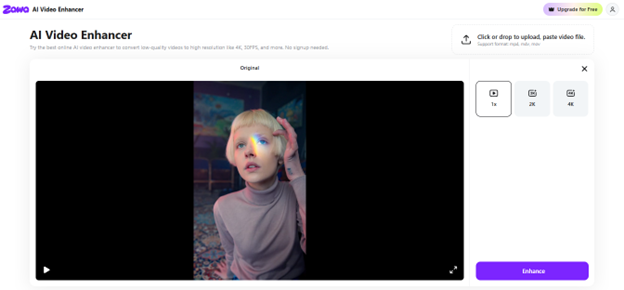
That's the reason why nowadays creators also use watermark removers along with AI enhancers like Zawa Video Quality Enhancer. After the watermark is removed, the video can be upscaled from low resolution to 1080P or even 4K.
Conclusion
In 2026, a TikTok watermark remover would no longer be just a minor editing tool. It would be integrated into an intelligent content creation system. Besides that, it would help the creators in repurposing their video content on several platforms without loss of reach or making them look unprofessional.
However, excellent results happen when watermark removal is combined with video enhancement products, like Zawa. They help to keep the sharpness and quality of videos for being the most suitable ones like Reels, Shorts, and other platforms. This basic technique in short-term video production may bring in more views, interactions, and overall performance.